StratG Innovations supports discovery and translational research through integrated biological services, patient-derived models, biobanking, advanced analytics and next-generation AI.
We bring together experimental biology, tissue-based research, patient-derived systems and data-led approaches to help research teams generate decision-ready evidence. Our model is collaborative, flexible and designed around the scientific question.
Assays and models aligned to project milestones.
Clear outputs for confident next-step decisions.
Our focus is not simply to run experiments, but to build research strategies that connect robust laboratory execution with translational relevance.
"Empowering health, Enriching Lives, serving humanity by pioneering innovations in Bio-Medical Research for the greater need"
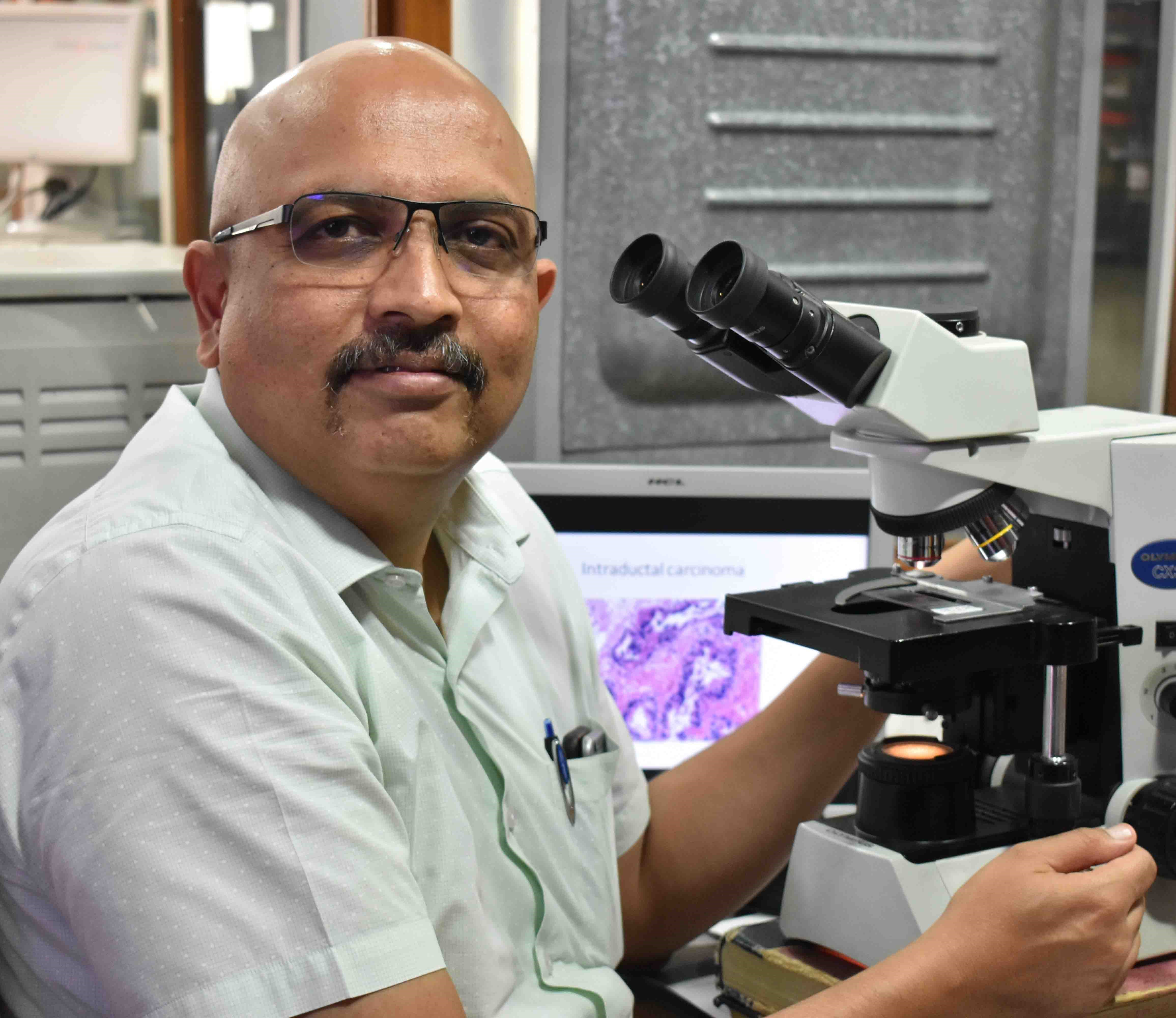
Meet the leadership team driving StratG Innovations' translational science, pathology and research programs.


Access to well-annotated biospecimens can strengthen target validation, biomarker research and model development. StratG's biobank capability is structured to support ethical sourcing, sample traceability, quality documentation and fit-for-purpose research use.
Research-grade biospecimens selected according to study-specific inclusion criteria and availability.
Documented handling, storage and sample-level metadata to support reproducible research.
Biobank samples can connect directly with histopathology, IHC, cell isolation and model generation.
Study design support for tissue-based biomarker assessment and translational research questions.
Modular services can be commissioned independently or integrated into a larger program.
Functional and phenotypic assays designed to evaluate compound activity, pathway modulation, viability, proliferation and mechanism-related endpoints.
Target-focused assay development and execution using quantitative readouts for activity, inhibition, binding and pathway-relevant biochemistry.
In vitro drug metabolism and pharmacokinetic support to characterize stability, permeability, protein binding and related developability parameters.
Tissue processing, staining, morphology assessment and immunohistochemistry workflows for biomarker localization and response evaluation.
Cell-based protein localization and expression analysis using optimized staining, imaging and quantitative interpretation workflows.
Fit-for-purpose assay design, optimization and validation tailored to target biology, sample type and development stage.
Three-dimensional models help bridge the gap between conventional monolayer assays and complex in vivo biology.
Formation, growth, treatment response and image-based analysis of multicellular spheroids.
Patient-relevant organoid culture and compound testing for translational and precision-research applications.
Isolation and establishment of primary cells from appropriate patient-derived specimens using optimized handling workflows.
Morphological, phenotypic and molecular characterization to document model identity and key biological features.
Development of spheroid and organoid systems to enable response profiling in a more representative cellular context.
AI-assisted workflows can support image quantification, feature extraction, response classification and integrated data interpretation while maintaining scientist-led review.
Explore an AI CollaborationImage analysis for tissue morphology, staining patterns and biomarker quantification.
Pattern recognition and decision-support approaches for complex research datasets.
Our drug-repurposing approach combines biological rationale, evidence review, model selection and experimental validation to identify and prioritize new opportunities for existing or previously investigated compounds.
Reduce exploratory uncertainty by aligning computational hypotheses with relevant experimental evidence.
Start a ConversationTell us about your target, model, assay or translational challenge. Our team will connect with you to discuss a tailored approach.